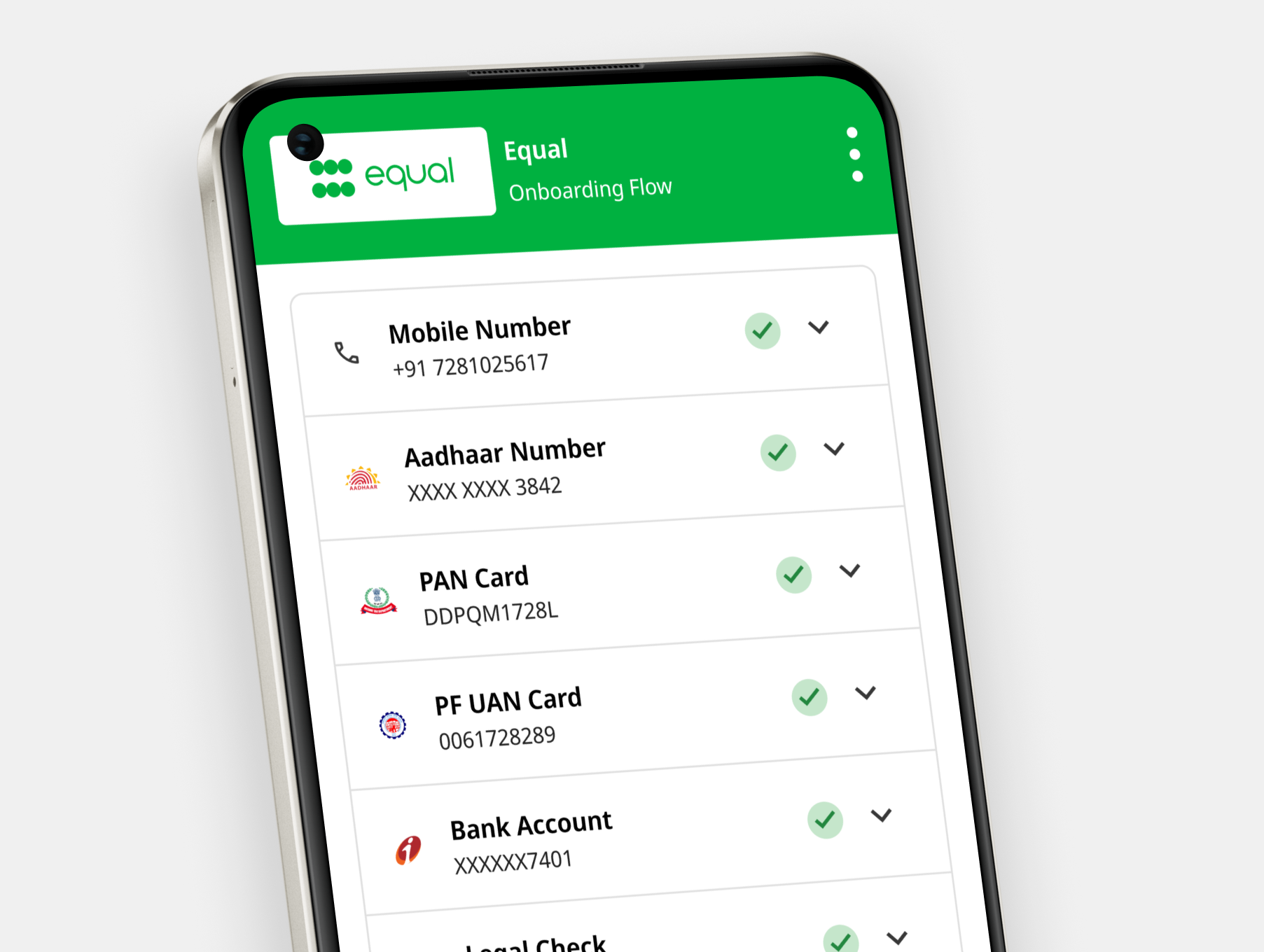
I redesigned and scaled background verification experiences serving 70M+ users.
The Problem
Many companies in India still rely on manual checks for employee verification that can take weeks, creating frustration for both businesses and employees. Existing verification tools have several issues like false positives, no consolidated reports, and hassle of managing multiple vendors. On top of that, the need to upload sensitive personal documents makes trust and data security absolutely critical.
Slow Process
Inaccuracy
Overly Complex
The Goal
1. Make background verification faster and easier for users. 2. Build trust through security and transparency. 3. Seamlessly integrate with partner businesses, with their background verification requirements and branding.
The Process
Getting Started:
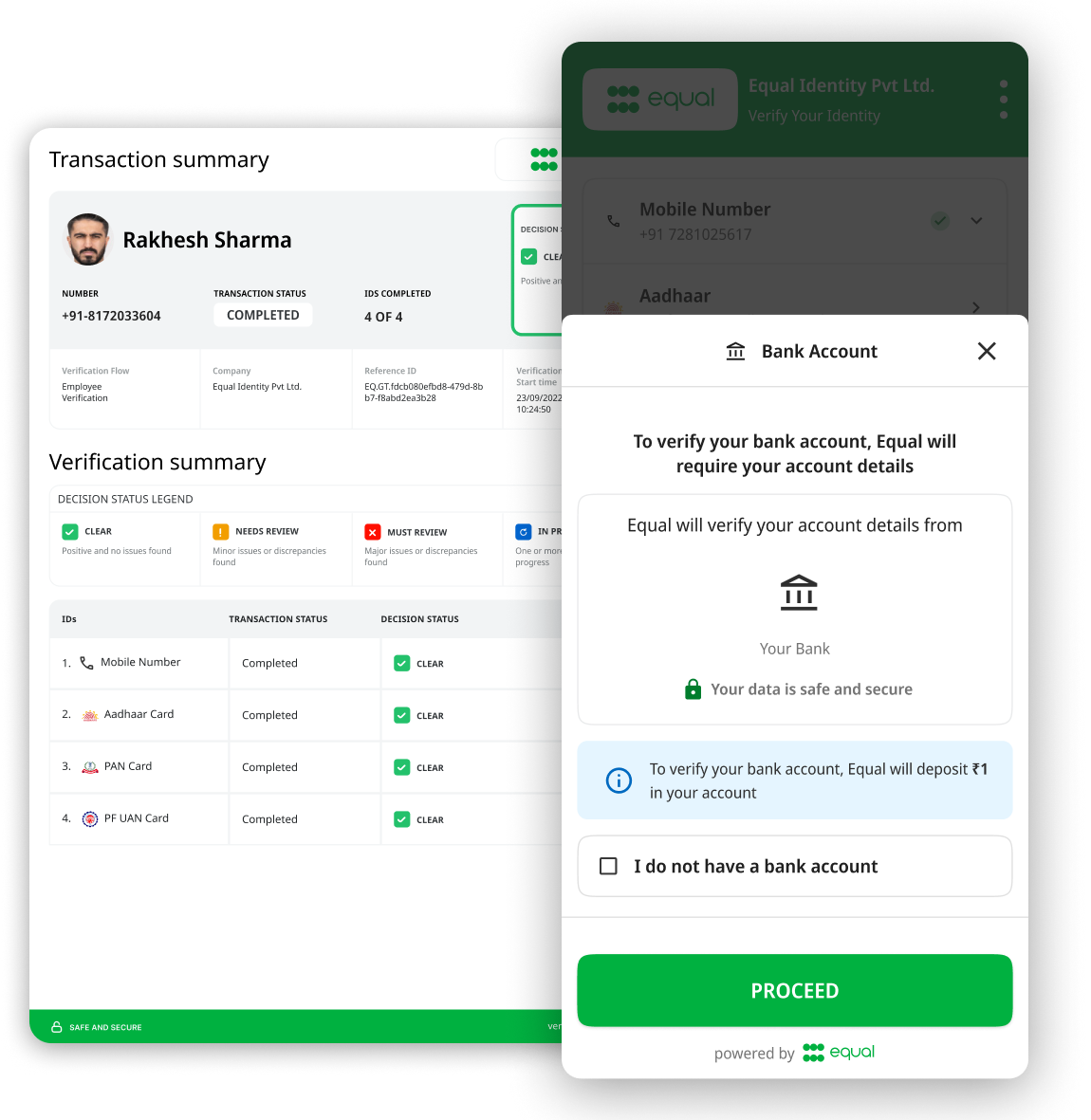
My initial work focused on designing new individual ID verification flows, or “keys,” within the existing experience
I found that users often acted as soon as a CTA appeared without reading anything on the screen, which made hierarchy, content density, and interaction clarity especially important.
Designing for Scale:
I designed new verification keys, client-specific flows, and consolidated verification reports while improving the UI along the way.
Every government document or ID type brought unique edge cases. Working with engineering and product teams, I mapped out all failure states, and verification requirements so future scenarios could be supported without repeatedly redesigning the experience.
The New Design
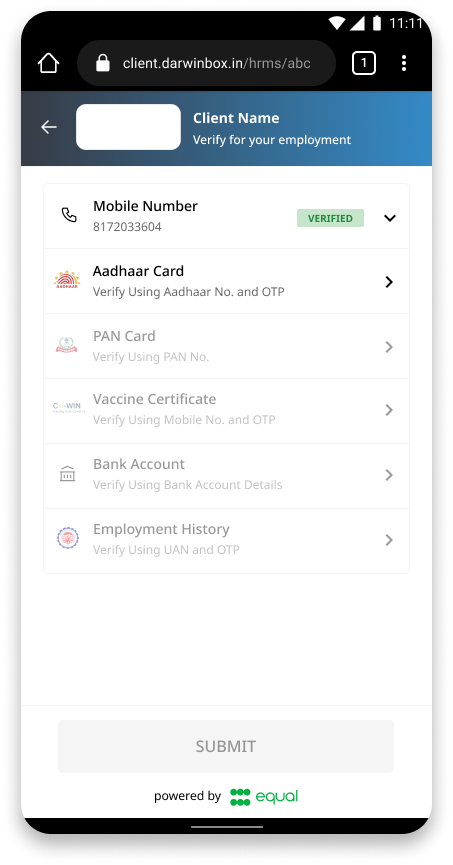
ID Gateway Re-Design:
Equal wanted to position IDG as a premium product rather than charging clients only for individual checks.
I took full ownership of the redesign, with the goal of making the gateway easier to use and more accessible, while giving the overall experience a more polished, premium feel.
Researching Beyond the Brief:
With limited research bandwidth, I advocated for additional time and independently spoke with blue-collar and lower-income users outside work, who regularly encounter identity-verification journeys.
Their feedback surfaced usability barriers that informed a more accessible, understandable flow without compromising the premium visual direction required by the business.
Equal Console Re-Design:
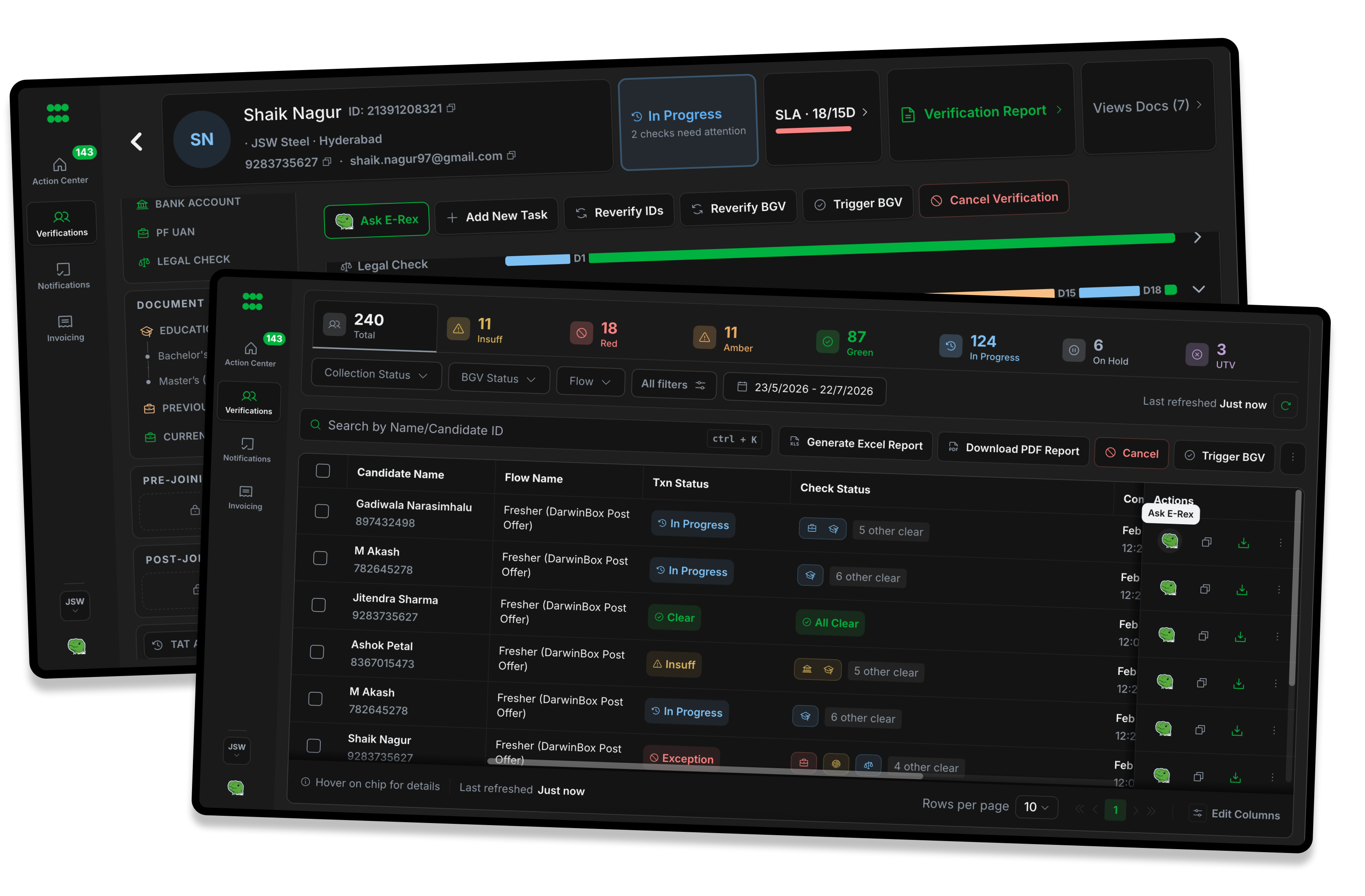
I also owned the re-design for Equal's Console - the dashboard for Client HR to help them identify discrepancies, resolve verification issues faster, and spend less time chasing candidates.
I structured the interface so new functionality could be added over time while preserving clear information hierarchy and efficient workflows. Using Claude, I delivered the re-designed UI as a production ready, fully functioning coded interface directly to the dev team, making it easier to launch.
The Outcome
The re-design resulted in a smoother, consistent BGV flow that met both user and merchant need better, with data to support it. It also supported sales efforts, and proved to be an overall better digital experience.
97%
Highest Success Rate in India
593k
New Quarterly ID Checks
Reflections
Working across Equal's BGV ecosystem taught me that designing at scale goes beyond individual screens. Changes had to account for user behavior, client-specific requirements, accessibility, engineering constraints, reusable systems, and long-term business needs.
As my role expanded across KYE, IDG, Console, and client-specific experiences, I became more deliberate about designing solutions that could scale across products rather than solving each problem in isolation.