I redesigned an educational game for kids to be more immersive and replayable.
What happened to Cool School?
Cool School was a globally popular conflict resolution video game designed by FJ Lennon for the US Department of Education. With flash games dying and the kids moving to mobile and tablets for learning based games, Cool School disappeared.
FJ wanted to bring the game back to life for the newer generation as a mobile experience, while improving the flaws from the previous version that wouldn't work with the current generation.
The Problems with the "Old School"
The original game followed a linear plot, where solving in-game conflicts would give you a trophy, and the game would end on collecting all of the trophies. This linear structure limited the game's replay value, especially in the current market where almost all video games have elements of replayability.
Moreover, times have changed. Diversity and inclusion are more important, kids are now more used to tablets and phones, and the amount of content they expect in a game has also changed a lot.
Linear Gameplay
Tech Advancements
Lack of Diversity
The Goal
1. Improve the game's replay value 2. Make a vibrant, colorful game prototype for our client based on the market trends for newer games 3. Make the game more inclusive and relatable for the newer generation and their conflicts
User Research
We decided to collaborate on-site with the UMD KidsTeam - a research group of kids, to gather qualitative data, test our prototype iterations and get new ideas for the game.
Contextual Inquiry
We observed the kids playing from a distance, noting their comments and reactions, and helping where needed.
Likes/Dislikes Session
At the end of playtime, we would ask them what they liked and disliked, and how would they improve the game.
Layered Elaboration
We asked them to draw on printouts of game screens, letting them draw on top of each other's ideas.
Key Observations
Importance of Identity
Kids associated the game avatar with their own identity
Freedom to Explore
They wished to be as free in the game as a virtual world
Immersive Experience
The game didn't feel relatable or engaging enough
The Solutions
Character Customization:
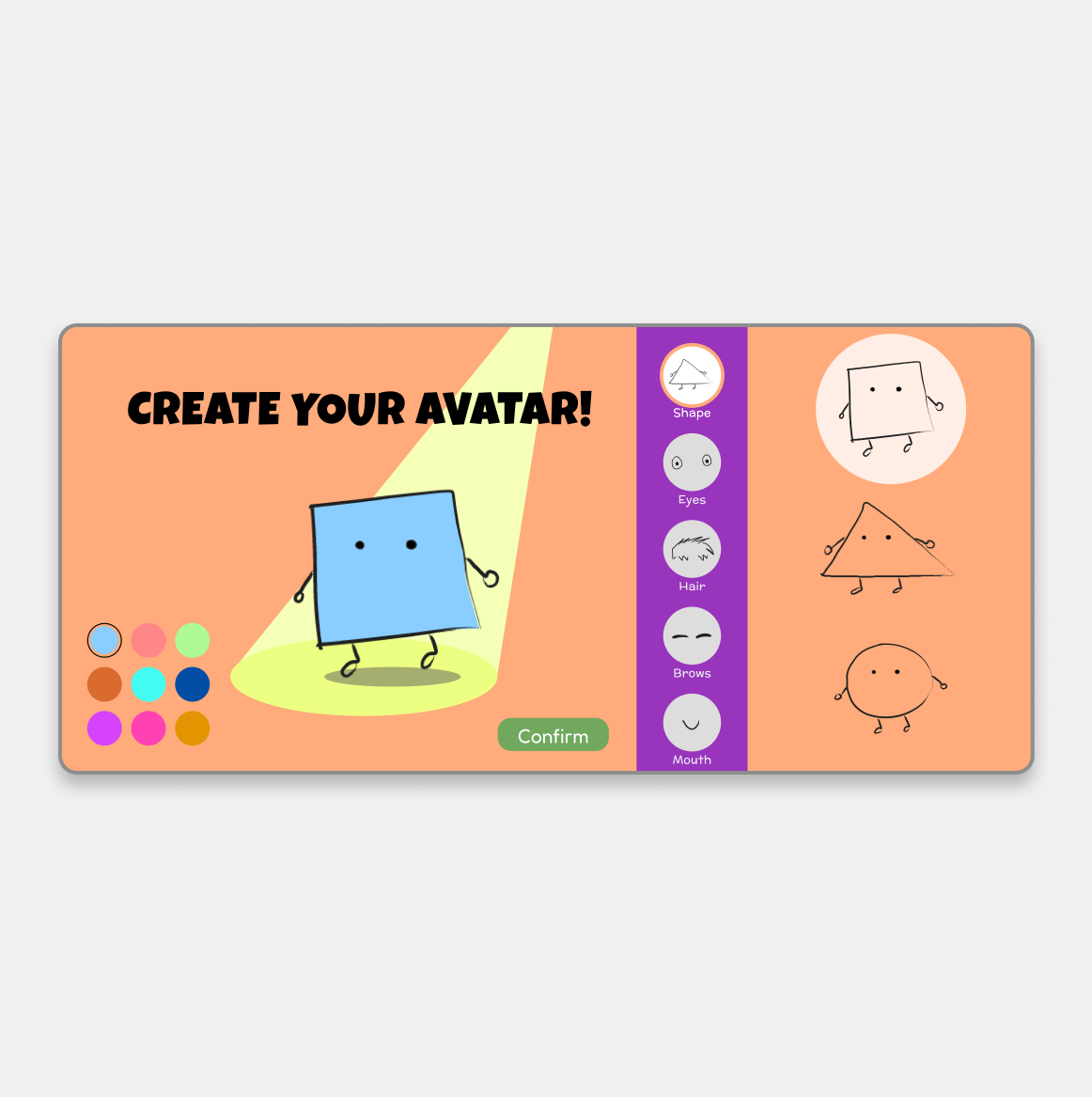
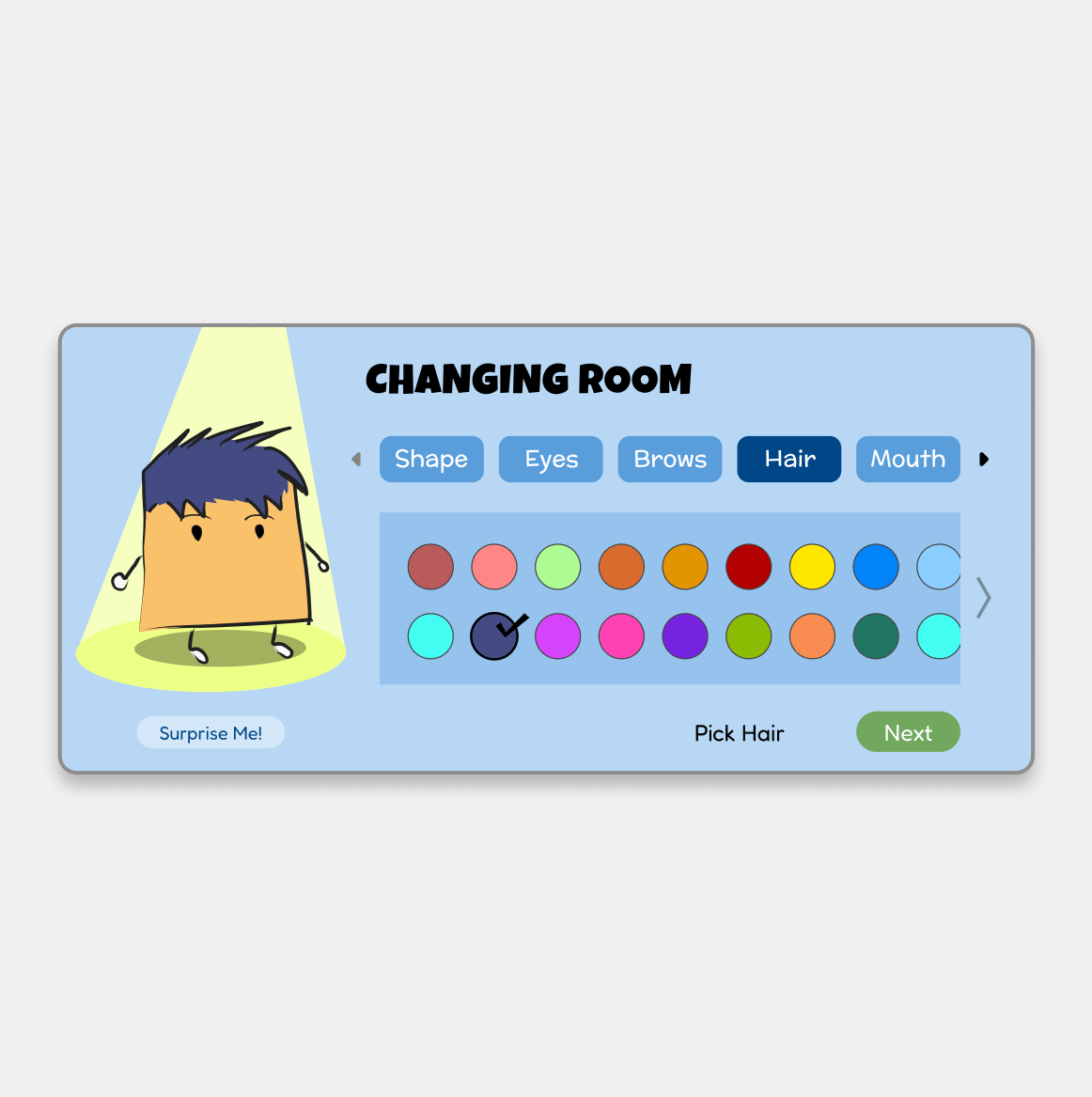
User: "I want to change my character's shape and color the way I want"
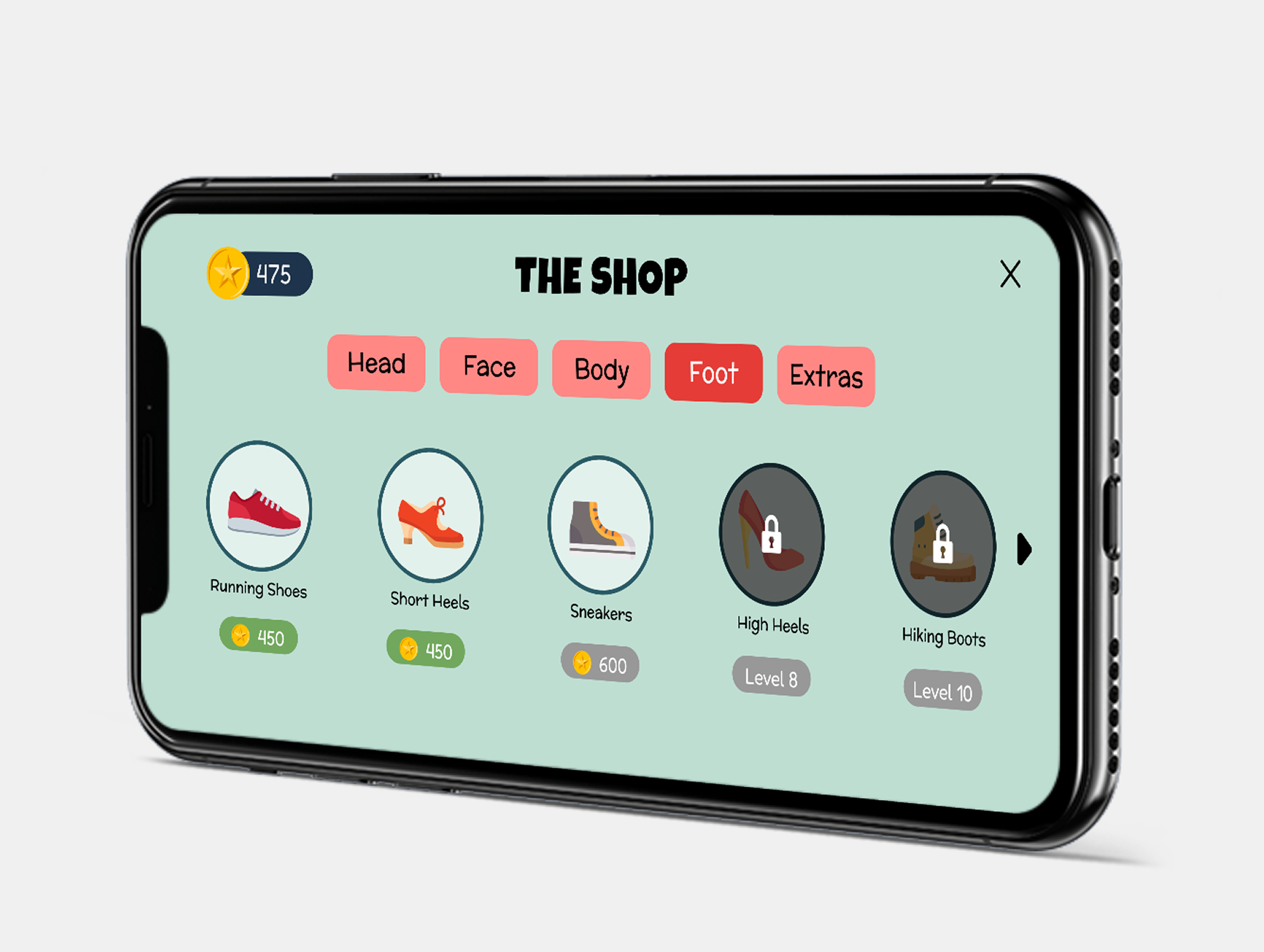
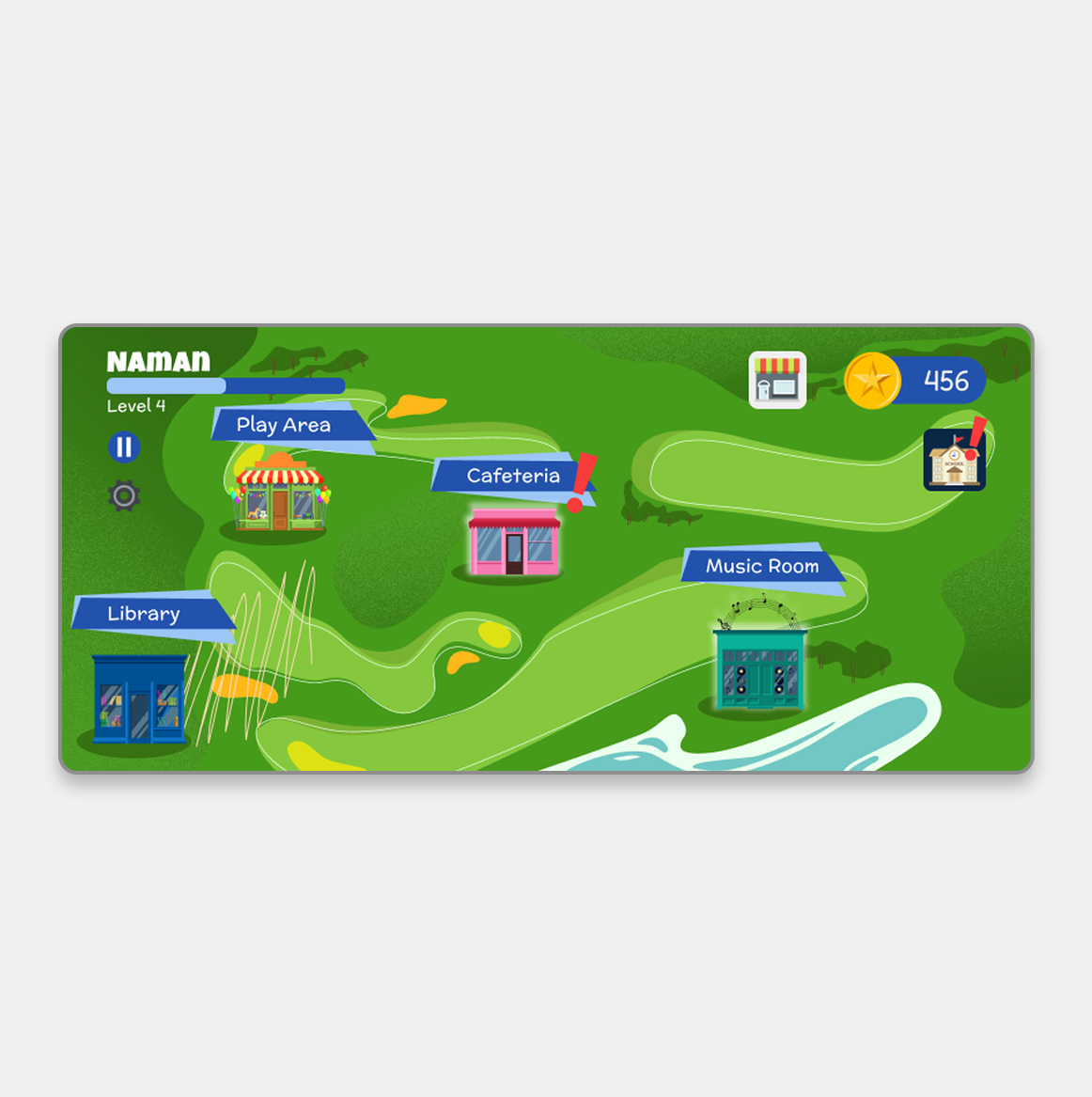
To give them a stronger sense of identity, I designed a feature that let players create their own character. I added more personalization through apparel shops and their interactions with different characters.
Ideation
Sprint 1
Final Sprint
Open World Experience:
User: "More places to go in the game with different designs will be nice, like another world to explore"
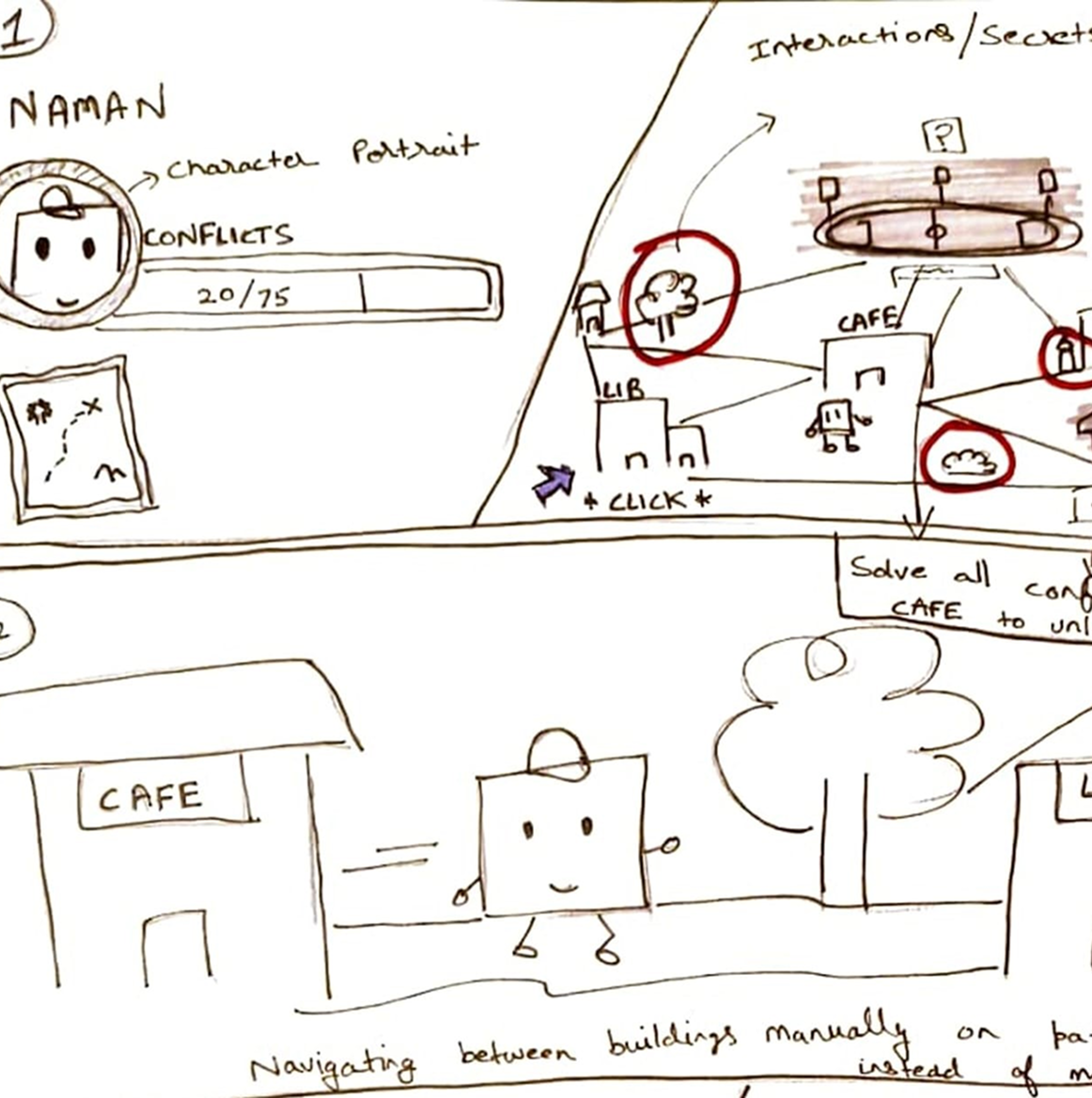
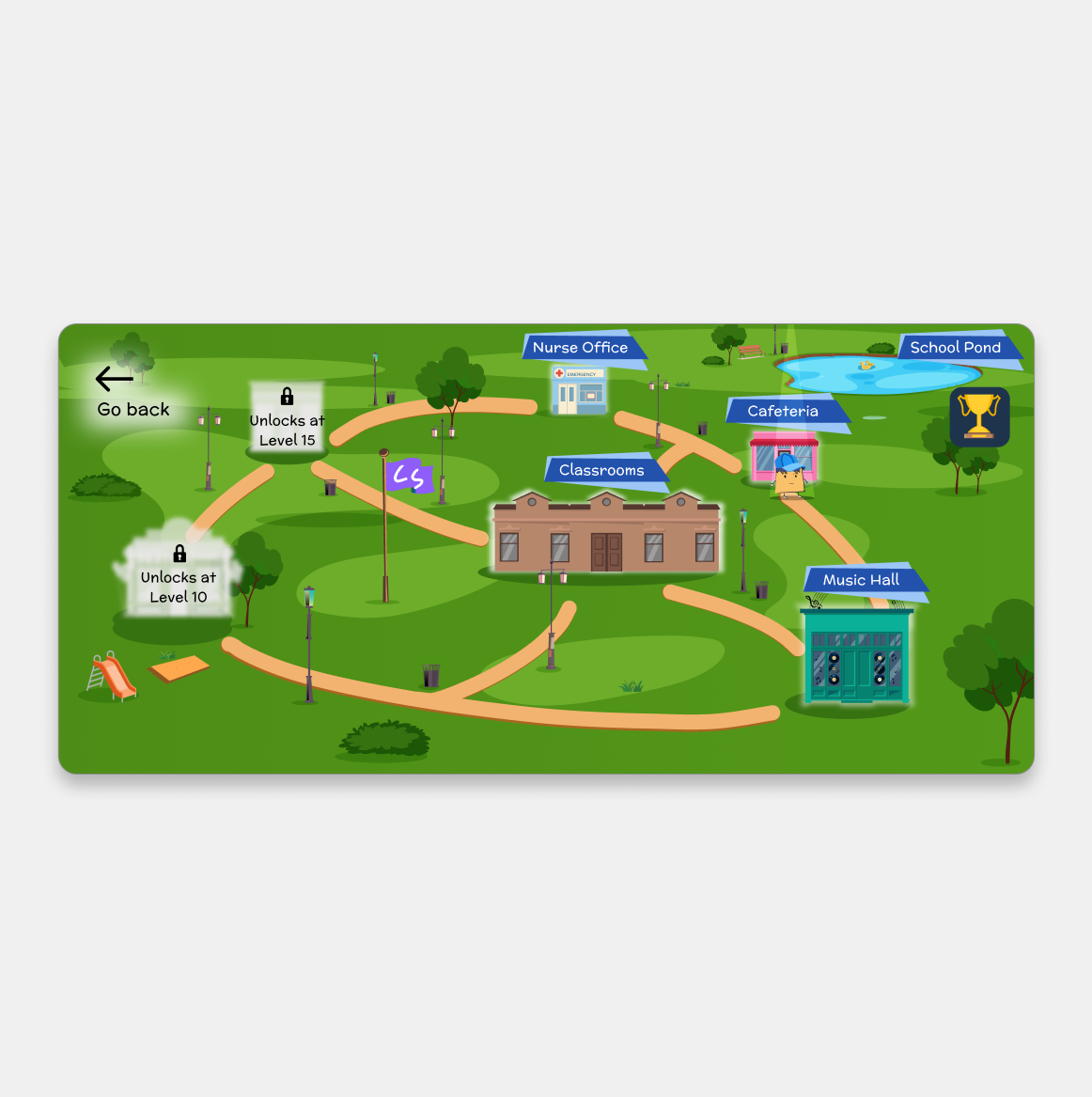
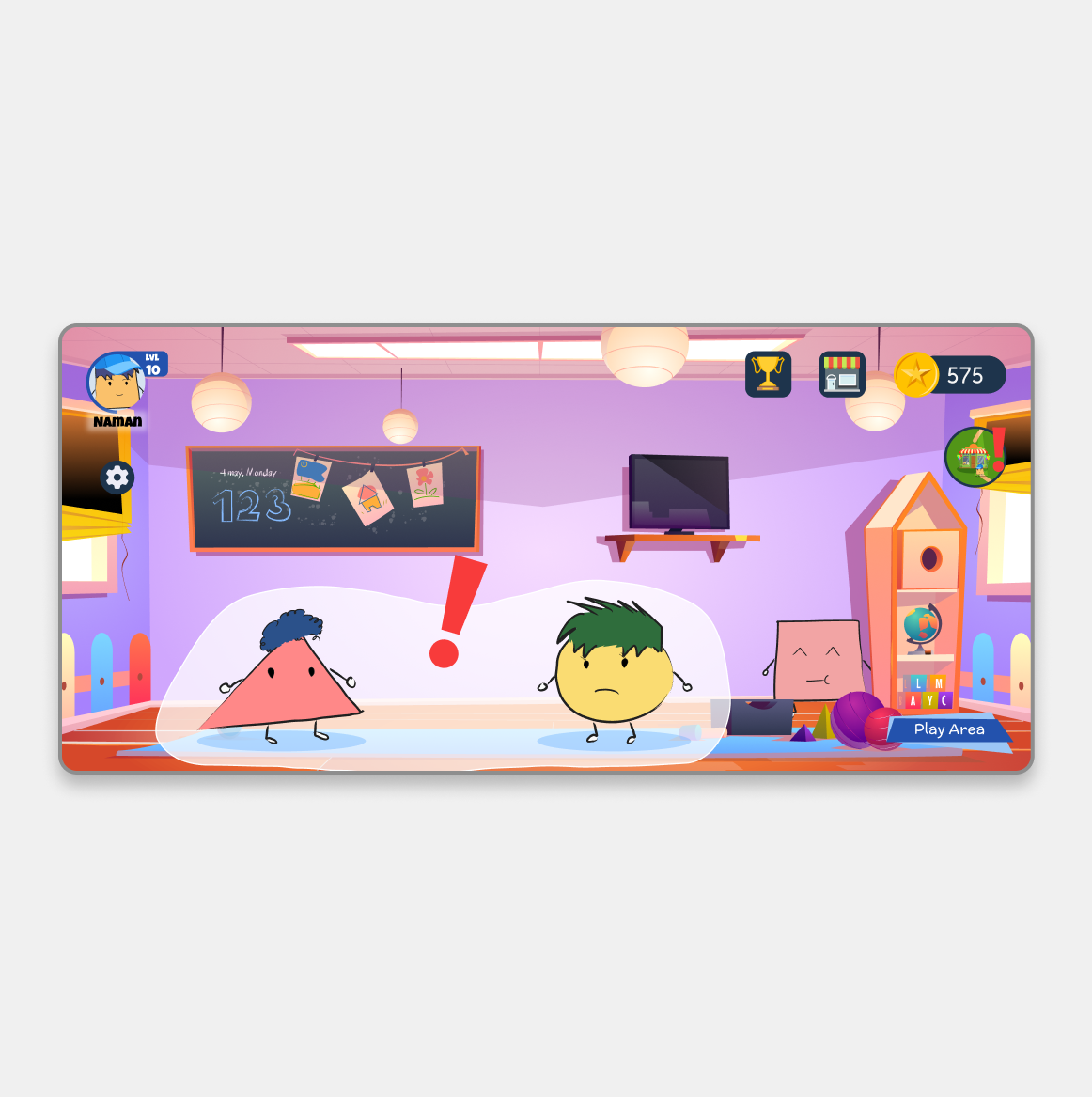
To make players feel free in the game, I redesigned the game as a semi-open world. This would allow the kids to roam, explore, and find conflicts to resolve on their own, also finding many interactions along the way.
Ideation
Sprint 1
Final Sprint
More interactions, more relatable plots:
User: "You can add side missions to the main quest"
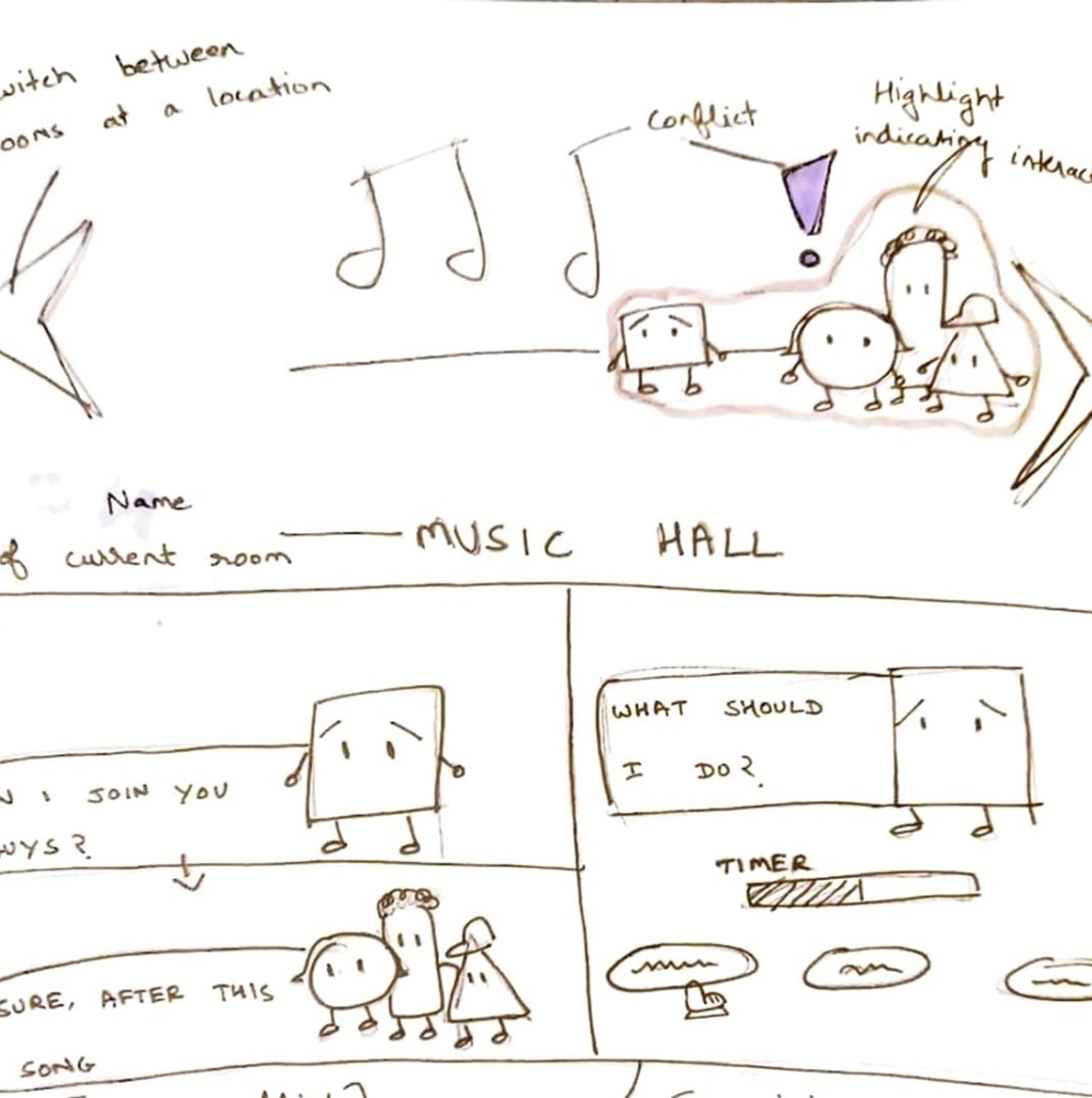
I added quests, rewards, secrets and several in game interactions with characters and objects around the school to make the game more immersive. Based on our research, and with the help of the client, I also updated the original plots to be more relatable and inclusive to modern kids.
Ideation
Sprint 1
Final Sprint
Tying it together
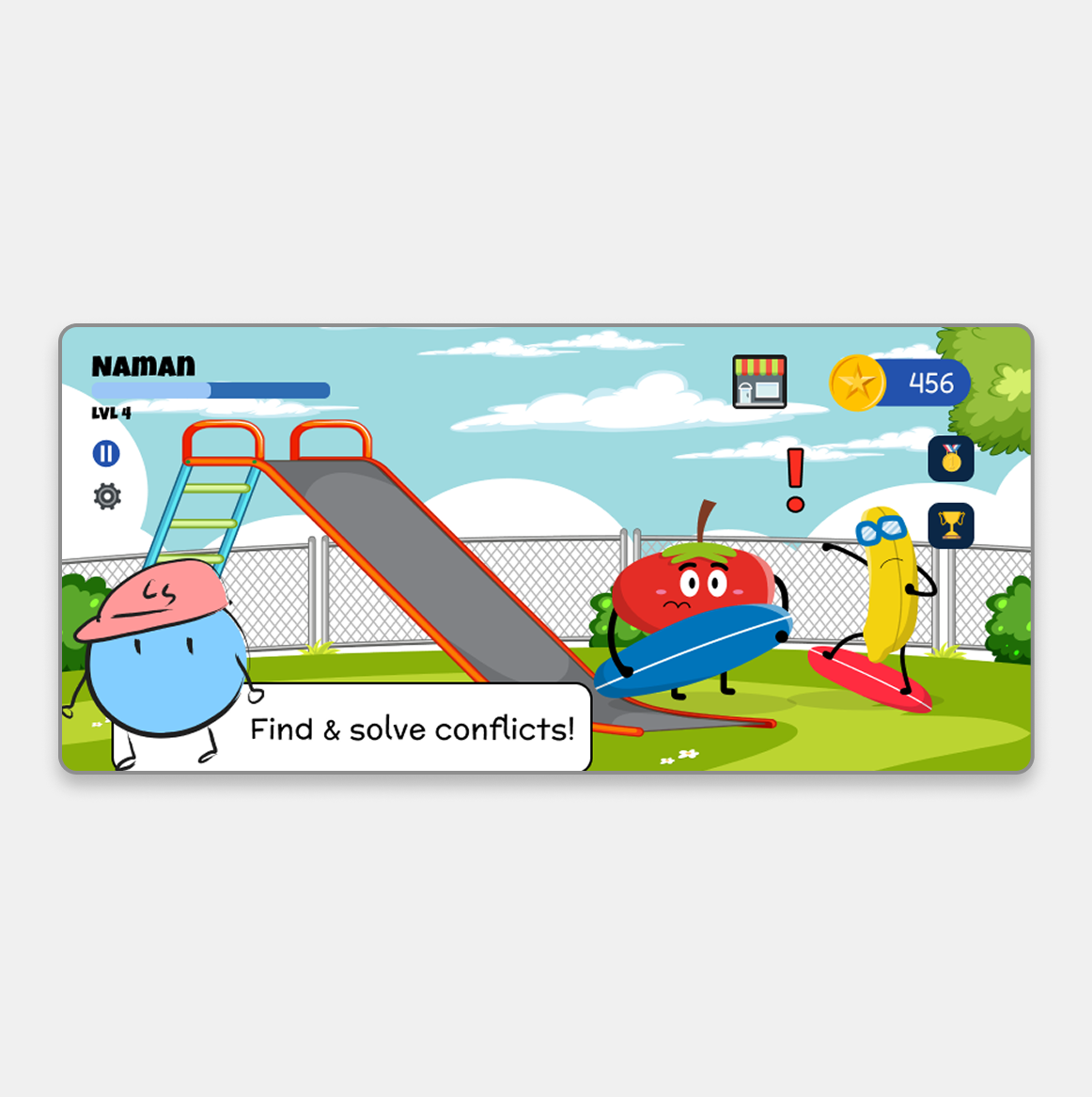
Using the research from all our design sprints, we created a cohesive, animated, playable prototype in Figma for our client. This is how the game looked like during Sprint 3 out of 5.
The Outcome
The prototype was well received by FJ Lennon and validated through extensive testing with children, yielding valuable user insights. It aligned with current market trends, FJ’s vision, expert feedback, and research findings, while showing significant improvements over the original game.
The prototype and supporting research data were used to present a proposal to the U.S. Department of Education for relaunching Cool School as a modern educational game.
24
Explorable Areas
18
New Side Adventures
300%
Increased In-game Events
Reflections
Working with kids is completely different than adults. They are harder to get insights out of, but will give more in-depth data once you make it fun. They are also brutally honest, which helps a lot in improving products.
Make your users comfortable! We had snacks, play-sessions and icebreakers to get the kids feeling happy first. It was much easier to get qualitative data from them after they were comfortable.